Parkinson’s disease is often associated with non-motor symptoms. These usually coincide with depression, anxiety and apathy, which can worsen the motor symptoms that typically accompany this neurological disorder. But a recent discovery could have found an answer to address the problem of comorbid depression in Parkinson’s. Recently, in fact, a new study published in Frontiers Neurology found that the antidepressant vortioxetine can effectively improve psychiatric symptoms in Parkinson’s disease with a beneficial impact on motor performance as well.
The Core of the Study
The effects of vortioxetine have been evaluated in comparison with sertraline, a popular SSRI traditionally prescribed to treat depression in comorbidity with Parkinson’s. To compare the two psychotropic drugs, the researchers enrolled 33 patients with idiopathic Parkinson’s and associated depression, in treatment with L-Dopa and no previous autoimmune, cardiac, or metabolic diseases. They were divided into two groups and received either 10-20 mg/day of vortioxetine or 50 mg/day of sertraline for 4 months. At the end of the evaluation, vortioxetine was superior to sertraline in improving cognitive function, anxiety, anhedonia, and apathy. Both of the drugs have antidepressant effects, but vortioxetine also showed a great capacity to modulate the underlying neuroinflammation of Parkinson’s.
“That is a comparative study with a restricted group of patients and can’t represent a large-scale finding. But the comparison between vortioxetine and sertraline is anyway extremely relevant to highlight the beneficial properties of vortioxetine in further clinical trials,” the researchers of the Department of Neurosciences, Mental Health, and Sensory Organs at Sapienza University in Rome, and authors of the study, stated in their paper.
Vortioxetine, hence, seems to promise further applications for depression associated with neurological conditions. This evaluative and longitudinal study makes us hope for the better.
What Is Vortioxetine?
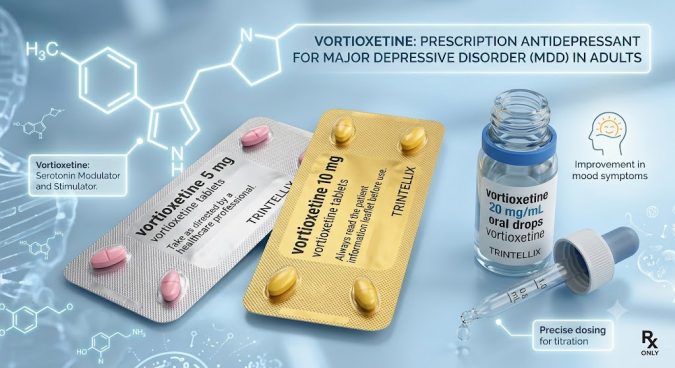
Vortioxetine is a multimodal antidepressant that simultaneously inhibits the serotonin transporter and modulates serotonin receptors, ameliorating cognitive symptoms.
Available with the commercial name Trintellix (or Brintellix), vortioxetine is gradually replacing SSRIs in the treatment of depression for its tolerability and safety profile and because it does not cause weight gain and sexual dysfunction.
The medication is available in drops and pills. The form contains ethanol as an excipient, and this may cause gastrointestinal problems in sensitive patients, especially in those who have Parkinson’s. The pills, instead, are more practical to take and, according to psychiatrists, have the same benefits as the drops.
The Results
In the aforementioned study, PD patients received vortioxetine in drops to gradually increase the dosage over the evaluation time. The enrolled subjects were 20 males and 13 women, with an average age of 68 years, disease onset at 60, and a severity of motor symptoms equal to MDS-UPDRS-III, aka an early stage from 1 to 2.5. Only 7 patients had a stage 3 disease. 14 patients had a tremor-dominant Parkinson’s and 19 postural and gait disturbances. Moreover, the age and onset of the disease were shorter in patients treated with vortioxetine. Due to their young age, vortioxetine proved to be helpful thanks to the absence of side effects like sexual dysfunction and weight gain. Furthermore, the treatment with vortioxetine showed benefits also in reducing neuroinflammation, which is usually a pathological feature of Parkinson’s.
After four months, vortioxetine also reduced inflammatory classical monocytes and increased non-classical monocytes involved in regenerative processes. PD patients indeed present high inflammatory monocytes and low regenerative monocytes. These values were reversed with the administration of vortioxetine. Sertraline, conversely, didn’t show these properties. Vortioxetine also lowered pro-inflammatory circulating cytokines, often heavily involved in the neuroinflammatory processes that trigger neurodegeneration. At the end of the treatment, PD patients haven’t experienced motor fluctuations, as instead happens with other psych drugs that interact with L-Dopa, making vortioxetine the favorite option for parkinsonian subjects.
“Vortioxetine is a very promising medication for Parkinson’s patients, not only because it improves cognitive function, but also because it does not interfere with L-Dopa and does not induce or worsen motor symptoms, as happens with traditional antidepressants and antypsychotics, offering, thus, an excellent quality of life,” Neuropharmacologist Filippo Caraci from Catania University said.
Conclusion
As regards the future applications of vortioxetine in Parkinson’s disease, a 2022 study gathered meaningful experiences from patients treated with this novel medication. The cases were related to subjects with depression in comorbidity with neurological disorders, especially Parkinson’s, stroke, dementia, and cognitive decline. All the cases reported, treated with vortioxetine, showed improvement in depression, memory and cognitive function, significantly contributing to improving the quality of life in those who bear the burden of neurological conditions associated with psychiatric disturbances.
Sources of the Article:
Journal of the Italian Society of Psychiatry
Professor Filippo Caraci, Neuropharmacologist from the University of Catania