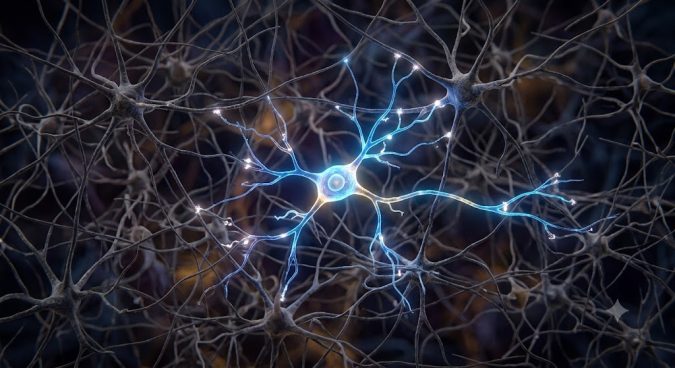
Neurodegenerative diseases like Parkinson’s and Alzheimer’s are characterized by the progressive loss of neurons in specific brain regions. So far, standard treatment has focused on controlling symptoms, without addressing the underlying causes of these conditions. Today, however, a new study published in the Journal of Nanobiotechnology tried to reverse the pattern of neurodegeneration and found that the coenzyme PQQ may halt the progression of Parkinson’s by clearing the accumulation of toxic alpha-synuclein in the brain.
The Core of the Study
Performed in China and conducted by a team of neuroscientists, the study used neuronal exosomes to mediate α-synuclein clearance and ameliorate Parkinson’s disease. The exosomes were administered to cells cultivated in vitro and in vivo using a Parkinson’s disease mouse model. These molecules carried biological particles of peptides and coenzyme PQQ, which crossed the blood-brain barrier (BBB) and reduced α-synuclein aggregation, improving Parkinson’s symptoms and promoting the survival of dopaminergic neurons, which are the cells primarily lost in this neurodegenerative disorder and the main cause of its typical motor disturbances.
What is Alpha-synuclein?
The blockage of toxic proteins is crucial to stop neuronal death and Parkinson’s progression. Alpha-synuclein is a protein that, under physiological conditions, stimulates neurotransmission and mitochondrial fission, but, in pathological conditions, misfolds and disseminates toxic molecules which propagate trans-synaptically and destroy neurons. This process, in turn, causes mitochondrial dysfunction and oxidative stress. Over time, alpha-synuclein accumulation exacerbates mitochondrial dysfunction and the related oxidative stress, leading to the fatal and final stage of the process, aka the death of dopaminergic neurons and the subsequent Parkinson’s, in which the alpha-synuclein accumulation in the brain is the primary landmark of the disease.
What Is Coenzyme PQQ?
Coenzyme PQQ, or pyrroloquinoline quinone, is a natural substance found in fruit, eggs and vegetables, with antioxidant and regenerative properties. Unlike Coenzyme Q10, which supports cellular energy, PQQ stimulates mitochondrial biogenesis, which means the growth of new cells. For its powerful properties, this coenzyme is studied and applied in regenerative medicine. The aforementioned study, in fact, found that PQQ reduces cellular oxidation, preventing mitochondrial loss and damage. “In Alzheimer’s disease research, PQQ exerts neuroprotection by ameliorating cognitive deficits, regulating genes related to synaptic function and anti-apoptosis, decreasing ROS levels, and activating the metabolism of nutrients. Thus, we propose to leverage the antioxidant properties of PQQ to improve mitochondrial status in dopaminergic neurons in the brain,” the researchers stated in their paper.
Challenges
In this study, the main challenge to overcome was the BBB, the membrane that regulates the passage of molecules and substances in the brain. To arrive in the target areas, these substances must be very small, or extremely minuscule, to be exact. For this reason, the researchers applied exosomes extracted by neurons. These are nanometer-sized extracellular vesicles, also called nanoparticles. Well tolerated and with low immunogenicity, exosomes are not very stable and their systemic circulation is extremely limited. Consequentially, the researchers were forced to create hybrid nanoparticles, combining exosomes with liposomes. The latter are tiny vesicles made of lipids that facilitate the transportation of drugs, vaccines and nutrients in the body.
The hybrid nanoparticles, which encapsulated self-developed αSyn aggregation-blocking peptide (sPep) and Coenzyme PQQ, named EL@sPep/P, were injected in vitro and in vivo PD models to cross the blood-brain barrier and reach the areas affected by Parkinson’s (striatum).
“Notably, peptides have emerged as a promising focus in biomedical research owing to their low molecular weight, minimal immunogenicity, ease of modification, and biodegradability. A growing body of studies has demonstrated that peptide-based drugs exert significant positive effects in the treatment of neurodegenerative diseases… Moreover, pyrroloquinoline quinone (PQQ), a redox cofactor, plays essential physiological roles, including serving as a nutritional factor and scavenging free radicals,” the researchers and authors of the study said in their paper.
The Results
The nanoparticles were administered to endothelial cells cultured in vitro, which mimic the BBB, and to in vivo PD mouse models exhibiting the clinical motor symptoms of human PD, including bradykinesia and postural instability.
In both of the cases, the particles easily crossed the blood-brain barrier. Mice were divided into four groups, including a control group. A therapeutic concentration of particles was administered to mice via injection. The drug had a prolonged circulation of 3.8 hours per mouse. Physiologically accumulated in the liver and kidneys for metabolism and excretion, the nanoparticles reached the brain, as shown by fluorescence imaging. Specifically, the striatum was found to be remarkably enriched in EL@sPep/P.Indeed, the treated mice showed a marked improvement in gait and increased cognitive performance.
“The above results indicated this treatment contributes to the improvement of motor and cognitive functions in PD model mice,” the researchers concluded.
Conclusion
As seen, the study that aims at regenerating neurons in Parkinson’s disease was performed in laboratory-cultured cells and in mice. Further clinical trials in humans will be necessary to validate the current results. But the burden of Parkinson’s is globally on the rise, and the discovery of a treatment that can stop or halt its progression is more than hope: it is urgent.
Source of the article: