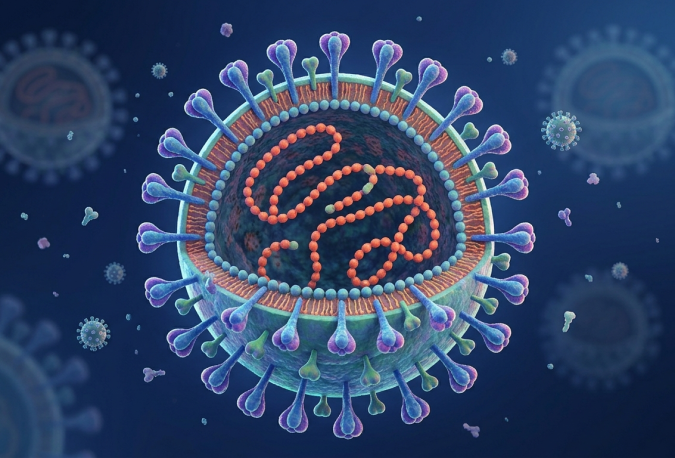
The hantavirus outbreak that emerged on the Hondius cruise ship in recent days is being closely monitored by the World Health Organization and many other health institutions. To date, the risks associated with the spread of the disease have been defined as low by the WHO itself, and at this stage there is no evidence to suggest a new pandemic, despite the alarmist information circulating, especially on social media. The situation is nevertheless complex and unprecedented.
What we know
It all began on the Hondius cruise ship, during a cruise between Antarctica and the South Atlantic Ocean. The ship departed on April 1st from Ushuaia, in the far south of Argentina, with approximately 150 people on board. Ten days later, a passenger from the Netherlands died of respiratory problems, and on April 24th, his body was flown to Johannesburg, South Africa, escorted by his wife, who died two days later in hospital.
On April 27, a third sick person was transported from the ship to Johannesburg, where they received treatment and were diagnosed with hantavirus. News of this began to circulate, with suspicions that there might be other infected people aboard the Hondius. On May 2, a third person died aboard the ship, which arrived in Cape Verde, off the coast of Africa, the following day.
On May 6, three people were removed from the ship due to symptoms suggestive of hantavirus infection. Meanwhile, it emerged that more than 20 people had disembarked during intermediate stops on the cruise in the previous weeks, and then returned to their countries of origin.
On May 7, a flight attendant for the Dutch airline KLM was hospitalized in Amsterdam for a suspected hantavirus infection. On April 25, the assistant had come into contact with the woman who later died in Johannesburg, before she was removed from the plane carrying her husband’s remains to the Netherlands. The woman had obvious respiratory problems and was therefore prevented from continuing her journey.
The Hondius is now en route to the Canary Islands, where medical care will be provided to passengers.
Origin and Spread
WHO Director-General Tedros Adhanom Ghebreyesus said in a press conference on Thursday that the Dutch couple had traveled extensively through Uruguay, Chile, and Argentina before boarding in Ushuaia. They had participated in birdwatching sessions in areas home to rodents known to be a natural reservoir for Andes virus, the type of hantavirus responsible for the current outbreak.
According to information gathered by the WHO, there are eight known cases to date: five confirmed as Andes virus infections and three still suspected.
A person who had only traveled part of the Hondius voyage and then returned to Switzerland tested positive. In the United Kingdom, two people who had only participated in part of the cruise said they were self-isolating, despite not having any symptoms so far. In the United States, health authorities confirmed they are monitoring several people who had participated in part of the cruise.
Hantavirus and Andes Virus
There are approximately 40 species of hantavirus (Orthohantavirus), known to infect small rodents such as mice, rats, and voles (similar to hamsters), which act as reservoirs without any particular symptoms. Viral particles are expelled through their feces, saliva, and urine, and are thus transmitted to other rodents. In some cases, contact with these substances can cause rodent-to-human transmission, with symptoms that vary greatly depending on the virus species and the individual’s immune defenses.
The Andes virus is widespread in South America and is highly prevalent in Argentina, one of the countries with the highest number of rodent-to-human infections each year. Between one and eight weeks pass between infection and the onset of symptoms. This complicates diagnosis, as initial symptoms such as fever and fatigue can be confused with those of the common flu. As symptoms progress, respiratory failure sets in, which in severe cases becomes fatal.
The Andes virus has a high fatality rate: approximately 40 percent of people who contract it die. There are no vaccines and no specific treatments; the therapies administered are primarily to relieve symptoms, promote breathing, and stimulate the body’s immune response to halt the viral infection.
Contagion
In general, hantaviruses are not transmitted from person to person, but only through contact with the feces, urine, and saliva of infected rodents. However, there has been discussion for some time about the possibility of direct person-to-person transmission of some hantaviruses, and the Andes virus is one of them.
In South America, infections have been observed in the past within families or small communities, suggesting the virus spread from person to person, not just from animal to person. Reconstructing the transmission dynamics, however, is not easy, especially in isolated and rural areas, so it cannot be ruled out that multiple people in those groups were exposed to rodent feces, saliva, or urine, and not simply to a person who had already been infected. Evidence suggests direct person-to-person spread, but there is still no scientific consensus.
Risks
Receiving news about a virus that is usually little talked about, just a few years after the end of a coronavirus pandemic, can understandably generate some concern, which is why WHO officials held a press conference on Thursday to clarify some points.
They explained that the situation is very different from that at the end of 2019. Hantaviruses are very different from coronaviruses: they are transmitted differently and are not as contagious.
Respiratory coronaviruses, such as SARS-CoV-2, which causes COVID-19, are efficiently transmitted through respiratory droplets, even during brief contact and in shared environments. Person-to-person transmission of the Andes virus, as we have seen, is rare (and still debated), and is believed to occur after close, prolonged contact. The coronavirus also causes long chains of infection, while the transmissibility of hantaviruses is more limited, with chains that tend to end spontaneously.
Hantavirus infections are also more severe among those who develop symptoms, and their high lethality makes their circulation among humans less likely. Theoretically, an Andes virus could accumulate mutations that make it “adapted” to humans over time and therefore more contagious, but this is currently considered unlikely, and there are no clear signs that anything similar is happening. Virus sequencing among positive individuals—that is, analyzing the virus’s genetic characteristics—is essential to understand whether and how the virus itself is changing.
For all these reasons, the WHO has reiterated that the risk to the general population remains low and that attention must be focused primarily on people with symptoms, or who may develop them in the coming weeks.
Original source: Il Post