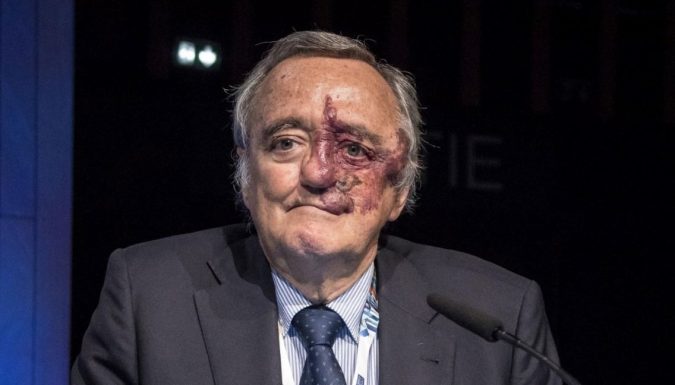
Pancreatic cancer has always been described by oncologists as a “fortress”—a disease so aggressive, so resistant to treatment, and so adept at evading the immune system that its survival rates have barely budged while other cancers have seen dramatic progress. However, in early 2026, a seismic shift occurred in the field of oncology. A research team at the Spanish National Cancer Research Centre (CNIO) in Madrid, led by the legendary biochemist Mariano Barbacid (see the image), published findings that have ignited hope across the global medical community.
For the first time in experimental history, researchers have successfully achieved the complete and permanent regression of the most common and lethal form of pancreatic cancer: pancreatic ductal adenocarcinoma (PDAC). Using a sophisticated “triple-drug” approach, the team eliminated tumors in mice with no relapse and remarkably low toxicity.
The Architect of the Discovery: Who is Mariano Barbacid?
To understand the weight of this discovery, one must look at the man behind it. Mariano Barbacid is not just a researcher; he is a titan of 20th and 21st-century molecular biology.
Born in Madrid in 1949, Barbacid’s career has been defined by a relentless pursuit of the “roots” of cancer. In 1982, while working at the National Cancer Institute in the United States, he achieved scientific immortality by isolating the first human oncogene—a gene that, when mutated, triggers the development of cancer. This gene, known as H-RAS, belongs to the RAS family, which is now known to be responsible for approximately one-fifth of all human cancers.
After a brilliant career in the U.S. and a leadership stint in the pharmaceutical industry (where he helped fast-track oncology drugs), Barbacid returned to Spain to found the CNIO. For the last two decades, he has focused his work specifically on KRAS, a drug escaping protein that drives tumors, which account for over 90% of pancreatic cancer cases.
The Triple Strategy: How the Cure Works
The hallmark of pancreatic cancer’s lethality is its ability to adapt. When a single drug blocks one growth pathway, the tumor simply “rewires” itself, finding an alternative route to continue spreading. Barbacid’s team realized that a single-drug strategy was akin to trying to stop a flood with a single sandbag.
Their breakthrough, published in the journal Proceedings of the National Academy of Sciences (PNAS), utilizes a triple combination of drugs that attack the cancer from three independent angles simultaneously:
- Daraxonrasib: An experimental KRAS inhibitor that blocks the primary “engine” of the tumor.
- Afatinib: A drug already approved for lung cancer that shuts down the EGFR pathway—the most common “escape route” the cancer uses when KRAS is blocked.
- SD36: A protein degrader that targets STAT3, a “backup system” that helps cancer cells survive stress and resist therapy.
By hitting the primary driver, the escape route, and the emergency backup all at once, the researchers left the cancer with nowhere to go. In three different mouse models—including those using human patient-derived tumors—the results were unanimous: the tumors vanished. Even more impressive was the follow-up; the mice remained cancer-free for over 200 days after treatment stopped, a timeframe that, in mouse years, suggests a permanent cure.
The Scientific Breakthrough in Detail
The core of the discovery lies in a specific experimental triple therapy that has achieved what many thought impossible: the complete and permanent elimination of pancreatic tumors in mice.
The primary challenge with pancreatic ductal adenocarcinoma (PDAC) has always been its aggressive relapse and ability to develop resistance to conventional drugs. However, this new study demonstrates a treatment that not only eradicated the tumors but prevented them from returning for over 200 days after the treatment ended. This timeframe is particularly significant as it suggests the cancer did not find a biological “workaround” to survive.
Mechanics of the Triple Therapy
The treatment’s success is attributed to its multi-pronged attack on the cancer’s survival mechanisms. While the specific names of all compounds are being refined for human application, the therapy consists of three distinct agents:
- An existing lung cancer drug: An agent already approved for other uses, repurposed to hit a key vulnerability.
- A protein degrader: A modern class of drugs that physically breaks down cancer-promoting proteins rather than just inhibiting them.
- A targeted therapy: An additional agent that rounds out the attack, ensuring no “escape routes” are left for the tumor cells.
Crucially, this combination was well-tolerated across multiple mouse models, showing significant regression in both genetically engineered tumors and patient-derived xenografts without causing major side effects.
The Global Context and Urgency
The need for such a breakthrough is underscored by the grim statistics surrounding the disease. Pancreatic cancer remains the 12th most common cancer globally, but its mortality rate is disproportionately high.
- In the United States, it accounts for only 3% of all cancer diagnoses, yet it is responsible for nearly 8% of all cancer-related deaths.
- Projections for 2026 estimate that approximately 67,530 people will be diagnosed in the U.S. alone, with a staggering 52,740 deaths expected within the same year.
Researcher Perspective
Despite the success, Dr. Mariano Barbacid and his team emphasize that there is a long road ahead before this can reach human patients. Barbacid stated to PNAS that while results of this nature have “never been obtained before,” the transition to human clinical trials is a complex optimization process that is still several years away.
The findings represent a transformative step forward, shifting the narrative of pancreatic cancer from an “untreatable” diagnosis to one where a potential cure is scientifically visible on the horizon.
What Dr. Mariano Barbacid Said
Despite the viral success of the news, Dr. Barbacid has maintained a characteristically grounded and cautious stance, emphasizing the distance between a mouse model and a human pharmacy.
“For the first time, we have achieved a complete, lasting response with low toxicity against pancreatic cancer in experimental models. These studies open the road to design novel combination therapies that may improve the survival of PDAC patients.”
However, he is quick to temper expectations regarding the timeline:
“It is important to understand that, although experimental results like those described here have never been obtained before, we are not yet in a position to carry out clinical trials tomorrow. The path to optimizing this for humans will require significant funding and rigorous safety testing.”
The “Valley of Death”: The Financial Obstacle
The primary hurdle currently standing between this “cure” and the patients who need it is not scientific, but financial. Transitioning from successful animal trials to Phase 1 human clinical trials is a notoriously expensive process, often called the “Valley of Death” in drug development.
CNIO estimates that approximately €3.5 million is needed immediately for toxicology studies and drug manufacturing, with a total of €30 million required to complete the first phase of human trials. In a move that highlights the urgency of the situation, the Spanish nonprofit Fundación CRIS Contra el Cáncer has launched a massive crowdfunding campaign to bridge the gap that public funding has yet to fill.
Bottom Line
Is this a “cure” for pancreatic cancer? In the strictest sense, it is a cure for the disease in mice. For humans, it represents the most viable and scientifically sound roadmap to a cure that has ever been produced.
The significance of the Barbacid study lies in its proof of concept: it proves that the “invincible” pancreatic tumor can be dismantled if attacked at enough points simultaneously. While it may take several years to reach the bedside, the “fortress” of pancreatic cancer finally has a breach in its walls.
Sources & References
- Primary Study: “A targeted combination therapy achieves effective pancreatic cancer regression and prevents tumor resistance,” published in the Proceedings of the National Academy of Sciences (PNAS), January 2026.
- Scientific Commentary: Nature Reviews Drug Discovery – Analysis of KRAS-inhibitor resistance.
- Medical Dialogues. (2026, February 3). Breakthrough Study: Spanish Researchers Cure Pancreatic Cancer in Mice Using Triple Therapy. YouTube. https://www.youtube.com/watch?v=JSCgEeUyopQ
- Institutional Reports: Centro Nacional de Investigaciones Oncológicas (CNIO) – Official Research Statements.
- Biographical Data: American Association for Cancer Research (AACR) – Fellows of the Academy: Mariano Barbacid, PhD.
- Funding & Advocacy: Fundación CRIS Contra el Cáncer (criscancer.org).

