Article checked and sources verified by Journalist Rosalba Mancuso –
For decades, we viewed climate change as a distant environmental threat. But in 2026, the medical community has reached a sobering consensus: the changing planet is a direct neurological toxin. We are no longer just losing glaciers; we are witnessing a shift in the biological integrity of the human brain, particularly in younger and middle-aged populations.
The Premature Aging of the Modern Brain
Neurological conditions once reserved for the elderly—such as early-onset dementia and Parkinsonian symptoms—are increasingly appearing in patients in their 30s and 40s.
Dr. Sanjay Gupta, a world-renowned neurosurgeon and CNN Chief Medical Correspondent, has noted that the environment is now a primary driver of brain health. He emphasizes that while we often focus on genetics, over 90% of our health and longevity is influenced by our environment and lifestyle choices. In 2026, that environment is becoming increasingly “pro-inflammatory.”
Recent research from the University of Pennsylvania and University College London (UCL) suggests that environmental stressors act as “accelerants” for brain aging. For young adults, the combination of chronic heat stress and fine particulate matter (PM2.5) creates a state of persistent neuroinflammation.
Strokes and Seizures: The Youth Trend
The 2026 medical landscape shows a concerning rise in “climate-triggered” acute events among middle-aged adults. Dr. Sanjay Gupta has highlighted that even minor dehydration—common during intensified heatwaves—can disrupt cognitive function and trigger latent neurological vulnerabilities.
- The Stroke Spike: Data from the World Stroke Organization now attributes nearly 20% of global stroke incidence to air pollution, with a growing number of cases occurring in adults under 50.
- The Seizure Threshold: Professor Sanjay Sisodiya, a leading neurologist at UCL, warns that rising temperatures are significantly worsening seizure control. In a recent statement, he noted, “The brain is a delicately balanced organ. We are seeing that extreme weather isn’t just an inconvenience; it is a trigger for those with pre-existing neurological conditions and a risk factor for those without them.”
Developing Minds in Danger
The most vulnerable group may also be the next generation. Research from Duke University indicates that prenatal exposure to climate stressors—like extreme heat and toxins released during wildfires—can “derail” the development of fetal physiological systems.
This exposure has been linked to:
- ADHD and Autism: Toxicants in air and water (like lead and mercury) released by shifting weather patterns can lead to misfiring neurons.
- Emotional Disorders: Higher risks of anxiety and depressive disorders later in life.
- Cognitive Development: Studies in The Journal of Climate Change and Health show that heat exposure even in adolescence can reduce brain connectivity in networks responsible for attention and memory.
The “Environmental Neurotoxin” Crisis
Climate change reshuffles the chemistry of our environment. Wildfires, now more frequent and intense, release heavy metals like mercury, lead, and arsenic back into the atmosphere.
Dr. Richard Isaacson, a prominent preventive neurologist and director of the Alzheimer’s Prevention Clinic, warns that these toxins can bypass the blood-brain barrier. He advocates for a proactive approach, stating that we must treat “environmental hygiene” with the same seriousness as cardiovascular health. In the current climate, toxins are no longer just outside us; they are entering the neural pathways of developing and middle-aged brains alike.
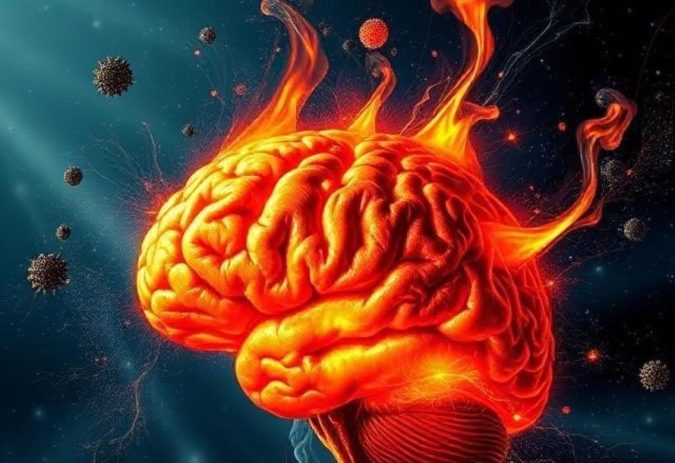
The “Fried” Brain: How Heat Damages Neurons
When the thermometer spikes, your brain struggles to stay cool. It’s not just about feeling sluggish. According to a 2022 analysis cited by the Alzheimer’s Research Association, between 10% and 28% of heat stroke survivors suffer from persistent brain damage.
Extreme heat triggers several destructive processes:
- Neuroinflammation: High temperatures cause the brain’s immune cells to go into overdrive, leading to low-grade, chronic inflammation.
- Oxidative Stress: Heat reduces levels of protective enzymes like superoxide dismutase (SOD), which can lead to cellular death in the brain.
- Cognitive Gaps: Even in healthy individuals, cognitive performance can drop by as much as 10% during intense heat exposure, as noted by researchers at the University of Adelaide.
Air Pollution: The Direct Path to Alzheimer’s
One of the most terrifying links discovered recently is between fine particulate matter (PM2.5) and neurodegenerative diseases. These tiny particles—often from fossil fuel combustion—are small enough to enter the brain directly through the olfactory nerve (your sense of smell).
A groundbreaking 2025 study from the University of Pennsylvania found that even short-term exposure to polluted air accelerates the buildup of amyloid plaques and tau tangles—the primary hallmarks of Alzheimer’s. In short, “smog in the brain” is making Alzheimer’s worse, faster.
The New Map of Brain Infections
As the planet warms, diseases that were once “tropical” are moving north. Warmer waters and shifting seasons are expanding the range of vectors like mosquitoes and ticks.
According to a report in Geographical Magazine, we are seeing an increase in:
- Naegleria fowleri: Known as the “brain-eating amoeba,” which thrives in warming freshwater.
- Vector-borne diseases: Japanese encephalitis, Zika, and West Nile virus are appearing in regions where they were previously unknown.
- Cyanobacteria: Toxic blooms in warming lakes release neurotoxins that have been linked to non-genetic cases of motor neuron disease.
The Next Steps
The damage isn’t just psychological—it’s structural. Protecting our “brainspan” in a changing climate requires more than just air conditioning; it requires systemic changes to air quality and urban design.
Your “Climate-Proof” Brain Strategy
While the global challenge is vast, there are evidence-based steps you can take to shield your nervous system from these environmental stressors.
1. Optimize Your Indoor Air
Since we spend 90% of our time indoors, controlling your personal “air envelope” is the highest-impact move.
- HEPA Filtration: Use a HEPA 13 or 14 air purifier. According to a 2025 study in JACC, these filters effectively remove the PM2.5 particles linked to neuroinflammation.
- Digital Air Monitoring: Use real-time monitors (like those found on AirNow.gov) to track local levels. On high-pollution days, keep windows sealed and avoid outdoor exercise.
2. Nutritional Neuro-Shielding
What you eat can act as a “non-chemical buffer” against environmental toxins.
- The BrAIN Diet: New research from 2025 suggests a “Brain Anti-Inflammatory Nutrition” (BrAIN) diet. Focus on Omega-3 fatty acids (found in fatty fish or algae oil) and polyphenols (berries, dark chocolate, and leafy greens) to activate Nrf2 signaling, which reduces oxidative stress in the brain.
- Hydration with Intention: During heatwaves, dehydration makes the blood thicker, reducing the brain’s ability to flush out metabolic waste.
3. Circadian and Thermal Regulation
- Nighttime Cooling: The brain repairs itself and clears proteins like amyloid-beta during sleep. Ensure your sleeping environment is cool (around 18°C), as “hot nights” prevent the brain’s natural self-cleaning process.
- The “Digital Sunset”: Reduce blue light exposure to maintain melatonin levels, which is a powerful antioxidant for the brain.
The Bottom Line
In 2026, brain health is no longer just about crossword puzzles and exercise; it is about environmental resilience. As climate change accelerates, the medical community is shifting toward “Environmental Neurology,” recognizing that a warming world creates a more vulnerable brain. Protecting your cognitive future now requires a proactive defense against the heat, toxins, and pollution that define our new atmospheric reality.
Sources and Authoritative Links
- University College London (UCL): Climate change poses growing threat to neurological health (2025)
- JAMA Neurology: Environmental Air Pollution and ALS Risk (2026)
- University of Pennsylvania: Air pollution worsens Alzheimer’s pathology (2025)
- Frontiers in Public Health: Neurological health in the era of climate change (2025)
- Professor Sanjay Sisodiya on Climate & Epilepsy: Expert Statement on Global Warming (2024)

