By Dr. Alessandro Valieri, Specialist in Otolaryngology
Proper ear cleaning is important to avoid annoying conditions ranging from earwax buildup to infections, persistent itching, and even hearing loss. Ear hygiene is both important and delicate. Improper cleaning, whether done too aggressively or too vigorously, can cause ear pain and, in particular, various conditions, including, as mentioned, earwax buildup.
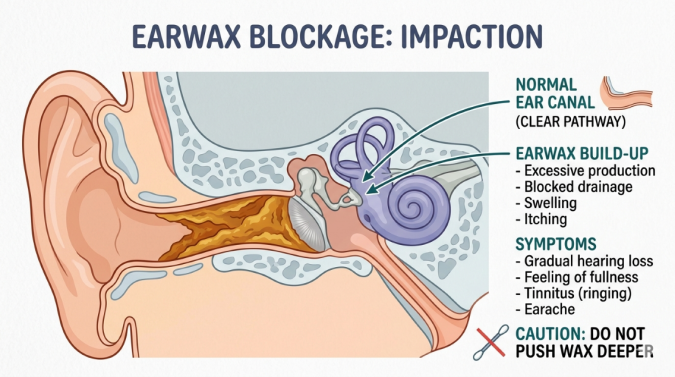
Earwax blockage, a very common problem, is an ear obstruction caused by the accumulation of earwax, which can be caused by improper use of common cotton swabs, but also by hairpins or other similar objects.
Excessive zeal and good intentions can sometimes, in fact, create a nuisance because incorrect use of these objects can end up pushing the earwax deeper, risking creating a breeding ground for fungi, bacteria, viruses and increasing the risk of infection or even blocking the ear canal, leading to hearing loss or even causing a ruptured eardrum.
We don’t do any harm, that’s why you shouldn’t use cotton swabs
According to the American Academy of Otolaryngology, “under ideal circumstances, ear canals should never be cleaned.” Unfortunately, many people mistakenly believe that earwax needs to be regularly removed for personal hygiene. This isn’t the case. In fact, attempting to remove it with cotton swabs or other devices can cause damage to the ear, including trauma, wax impaction, or even temporary deafness.
These objects push the wax deeper, and are capable of blocking the ear canal altogether.
Earwax, a friend who can become an enemy
Earwax is a substance produced by the glands in the ear canal, composed primarily of dead skin cells, fatty acids, alcohols, and cholesterol. Its purpose is to prevent the entry of dust, bacteria, and other germs that can damage the ear. Earwax protects the skin by maintaining proper lubrication of the ear canal. Excessive dryness can lead to itching and subsequent tissue tearing, opening the door to possible infections or fungal attacks.
If there is excess earwax
Most people don’t need to clean their ears except during a shower or bath. Excess earwax is automatically flushed out of the ear canal without the use of cotton swabs. Jaw movements (talking, chewing, etc.) also aid in earwax removal, and once it reaches the outer ear, it falls out or is dislodged when showering or bathing. However, there are some symptoms that may indicate excess earwax that warrant observation. These include:
- the obvious accumulation of wax
- ringing in the ears
- itching in the ears
- frequent ear pain
- partial hearing loss
- bad smell in the ears
- discharge or bleeding from the ears
- feeling of fullness in the ears
Earwax blockage: the most common symptoms
Suddenly lost hearing in one ear? The cause is often a buildup of earwax. Let’s look at the most common symptoms:
- ringing in the ears
- echo of one’s own voice
- reduction in hearing ability
- ear pain
- perception of full ear
- feeling of loss of balance/dizziness
How to get rid of earwax blockage
It’s important to follow a few precautions to remove the plug that forms due to the natural production of earwax. Let’s look at some safe methods for removing earwax. First, wax cones, which also use a physical principle. When burned, they create a vacuum that sucks in the plug. However, they must be used with great care because the hot wax can drip into the ear, causing burns and creating a blockage that is more difficult to remove. Alternatively, you can soften the wax first by adding a few drops of olive oil. Then, pour a capful of 3% hydrogen peroxide into each ear to draw out the wax. It’s worth noting that using plain sterile water or a sterile saline solution to soften earwax works just as well as oil. You’ll hear some foaming, which is completely normal, and you may feel a slight burning sensation.
Wait for the bubbling and stinging to subside (usually 5 to 10 minutes), then drain it onto a tissue and repeat with the other ear. If the symptoms persist, it’s likely because the cotton swabs have compacted the earwax deep into the ear canal. It may be advisable to repeat the process twice a day for 3 to 6 days. It’s always advisable not to remove the blockage yourself, as this could cause permanent damage. Never use cotton swabs, which are used to clean the outer auricle but should not be inserted into the ear canal, even for preventive cleaning. Misuse of cotton swabs, as already extensively discussed, could cause damage to the eardrum, which is much more serious and difficult to treat.
One solution is to use a cleaning spray with a saline solution, both readily available at pharmacies. If the situation doesn’t improve, you should consult a professional who can perform an ear wash. The ENT doctor introduces a small jet of water into the auditory canal, creating pressure and mechanically dislodging the blockage. For very dry earwax, it’s best to first soften it with special drops (cerulisin is the most popular), which loosen the blockage and facilitate expulsion. This rinsing technique, however, can also cause some dizziness, which is why it’s often replaced by the more modern and complication-free “microscopic rinsing,” which we’ll explore in more detail later.
Earwax Blockage: Watch Out for Ear Infection Risk
As mentioned, earwax buildup can also cause hearing loss and trigger otitis externa, an inflammation of the skin in the ear canal leading to the eardrum. Initially, there may be pain and discharge, followed by hearing loss. Even moisture alone is enough to cause otitis externa, which can sometimes be accompanied by severe itching due to a fungal infection, possibly caused by bacteria or even overuse of antibiotic drops. The most common symptoms of otitis externa are, as mentioned, itching associated with severe pain, swelling, and the possible appearance of pus. In more serious cases, a slight fever may also develop.
The discomfort may increase with movement of the head, neck, and mouth. If a bacterial infection occurs in the middle ear, or deeper inside the ear, it is considered otitis media. Beware of neglecting this infection, as it can damage the eardrum, resulting in severe pain accompanied by fever, drainage if the eardrum is ruptured, and deafness. This infection is typically caused by bacteria and often occurs after inflammation of the respiratory tract, such as the nose and throat (and, not surprisingly, it occurs especially in winter following colds, pharyngitis, or sinusitis).
Antibiotic or not?
Ear infections, especially in children, are a very common condition. Immediate antibiotic treatment is equally common, attempting to quickly treat what is essentially an inflammation of the ear. Which antibiotic should be used, how many days should it be administered, and how long does it take for it to take effect?
These are commonly questions that concerned parents ask their primary care physician or pediatrician. In cases of otitis media, antibiotics are typically administered for a variable period (5 to 10 days) because, although the ear pain may resolve quickly, the infection takes much longer to resolve completely. Often, however, especially in children, painkillers and analgesics are administered for a few days to relieve the pain, without resorting to antibiotics. This “wait-and-see” approach is linked to the well-known limitations of antibiotics, which are useless for infections caused by viruses, do not eliminate the fluid/pus accumulated in the middle ear, and can cause side effects.
Water in the ears and ear infections from swimming pools
Swimmer’s ear, also known as pool ear infection, is a bacterial infection of the skin covering the outer ear and ear canal. It’s usually caused by excessive exposure of the ear to water during activities such as swimming or other water sports. Water entering the ear canal can moisten and soften the skin, which becomes a breeding ground for bacteria. Cuts or abrasions can predispose to bacterial infections.
If you’re susceptible to these types of infections, you should reduce your exposure to water and use earplugs when bathing or swimming. You shouldn’t try to insert swabs or similar devices into your ear canal. It’s best to also use a few dehydrating drops after exercising or swimming.
The annoying itching of the ear
Itching in the ear is a common symptom of otitis externa, the causes of which are:
- skin damage of the external auditory canal caused by excessive rubbing (cotton swabs, hairpins)
- skin damage due to prolonged exposure to a humid environment (swimming pool water, sea water, shower water)
- eczema of the external auditory canal
- earwax plug
- psoriasis of the external auditory canal
- allergies to detergents and perfumes
If not properly treated, itching can become chronic, forcing the patient to scratch frequently and excessively, a behavior that can lead to a more serious infection. An ENT specialist examination with video microscopy of the ear allows the characteristics of the itching to be determined, in relation to the presence or absence of eczema of the external auditory canal or acute or chronic external otitis. Under the precise vision of the microscope, the ENT specialist removes the epidermal plug (or the earwax plug) using a thin suction cannula. The ear cleaning procedure, when performed under the microscope, is painless, does not produce a single drop of blood, and avoids the annoying dizziness caused by ear washing. To relieve itching, it is also possible to undergo phototherapy, a completely painless treatment that is performed in the office, in just a few minutes, by the ENT specialist.
What if the ear bleeds?
There are various causes of ear discharge: the origin is in the middle ear, where a bacterial or viral infection may be underway that prevents the Eustachian tubes from properly draining the fluid that has formed due to inflammation from a concomitant cold, or due to obstruction caused by enlarged adenoids.
Pay attention to home remedies and grandmother’s remedies
There are certain behaviors to avoid if you experience ear pain: it’s wrong to wet the ear or use any type of ear drops without first consulting your doctor. Never apply cotton wool if there’s discharge, as in this case, a leaking ear is a condition that shouldn’t be treated. The pain that really should be a concern is the persistent one, as stabbing pain can be caused by other factors. Given the wide range of pathologies that can be linked to the symptom, these types of “home remedies” could significantly hinder the patient’s recovery. Therefore, if the pain is prolonged, it’s best to consult a specialist.
How to Prevent Ear Infections
Preventive treatment for otitis media aims to correct predisposing factors: turbinate hypertrophy, adenoidism, allergies (pollen, dust, and other inhalants), and Eustachian tube dysfunction. If, especially in children, they suffer from recurrent infections, rather than prescribing medium- to long-term antibiotic therapy, the ENT specialist, following a thorough examination, will carefully evaluate the case and develop a treatment plan to prevent further infections. If otitis media occurs frequently in a child, there may be a predisposition due to the adenoids. Adenoid hypertrophy can only be detected with video fiberoscopy, a quick, painless, precise, and documented outpatient examination. If this examination reveals hypertrophy, surgical removal of the adenoids (coblator adenoidectomy) may be necessary. Adenoid removal with Coblator technology is the new frontier in pediatric ENT surgery. It prevents bleeding from the tissue being removed, is painless during and after the procedure, and ensures a quick recovery.
With Coblator adenoidectomy, the results are permanent and the use of unnecessary and harmful medications is avoided. In adults, however, recurring ear infections may be linked to poor nasal breathing, a sign of turbinate hypertrophy (a condition of the nose caused by swelling of the inner lining). This condition can be diagnosed and treated by an ENT specialist in the clinic with a quick, painless, and effective procedure using laser and radiofrequency. Sinusitis, an inflammatory process caused by an infection with various strains of bacteria that makes breathing difficult, can also cause ear infections. In this case, too, turbinate hypertrophy, resulting in poor nasal ventilation, can cause sinusitis and otitis media because it creates an environment where bacteria can proliferate. After a diagnosis performed with nasal video fibroscopy, the specialist can perform painless laser therapy for chronic sinusitis. This outpatient surgical treatment is performed under local anesthesia using a thin fiber optic laser.
If ear pain persists, it is best to consult an ENT specialist.
It’s important to carefully describe to your doctor what you’re feeling. If you have an ear condition, the specialist will recommend treatment, which—depending on the pain—could range from antibiotics (for example, in the case of bacterial otitis) to surgery, which is especially necessary when there’s severe trauma to the eardrum that can impair hearing. Thanks to new technologies, ENT specialists now have the ability to perform diagnostic examinations under a microscope. In just a few seconds, the patient can see live, high-definition images on a large monitor, how the ear is functioning and verify the effectiveness of treatments (for earwax blockage, otitis, inflammation of the eardrum, eczema, psoriasis of the ear canal).
How to permanently solve excess earwax and earwax blockage
Fortunately, today there are painless, quick, and effective outpatient treatments that can guarantee complete recovery from ear problems, particularly those related to excess earwax production or earwax blockages. Among these treatments, we recommend narrow-band UVB phototherapy. With a few sessions, it’s possible to put the inflamed ear glands to rest, slowing and stopping the excess earwax production. Phototherapy is a completely painless and risk-free treatment that presents no complications and quickly resolves the earwax blockage problem.
What if the ear pain is due to a nose problem?
A visit to the ENT specialist may reveal that ear pain is due to a stuffy nose and poor breathing. Nasal obstructions can cause uncomfortable pressure on the eardrum and, consequently, on the ear. Nasal polyps, enlarged turbinates, and other nasal conditions can also affect hearing and the auricle. Other conditions, such as swollen adenoids and chronic sinusitis, as well as allergies, can also cause ear pain.
The ENT examines the patient using a video endoscopy to determine the cause of the pain. If ear pain is determined to be related to a nasal condition, an outpatient laser treatment can be performed, which, in just a few minutes, can resolve a wide range of respiratory conditions. This non-invasive procedure can resolve both breathing problems and the resulting ear problems.
Original source of the article: https://www.alessandrovalieri.it/come-pulire-le-orecchie/