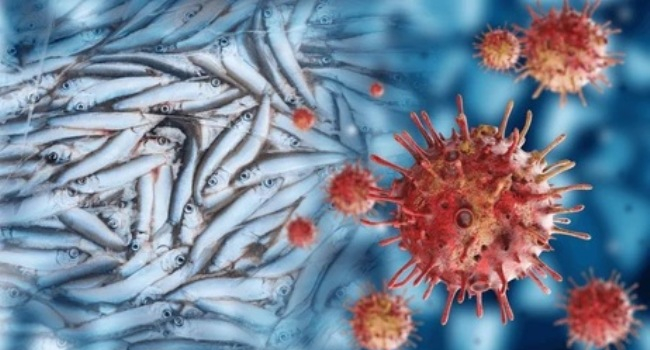
A virus that normally infects fish and marine invertebrates has begun to infect humans: this is the first time a spillover, or species jump, has been reported from marine animals to humans. Those infected by the pathogen, covert mortality nodavirus (CmNV), develop a strange eye disease that combines inflammation with increased internal pressure in the eye, with the risk of optic nerve damage and vision loss. The discovery described in Nature Microbiology occurred in China, but the virus is present in seas worldwide and is suspected to have made the “jump” to other terrestrial species as well.
A Suspicious Number of Eye Problems
Confirmation of CmNV infection came after a group of Chinese scientists, including researchers from the Chinese Academy of Fishery Sciences in Qingdao, analyzed the ocular secretions of 70 people who, between 2022 and 2025, had all been diagnosed with a mysterious eye disease called persistent ocular hypertension viral anterior uveitis (POH-VAU). This condition involves inflammation of the anterior segment of the eye (cornea, iris, ciliary body) and increased pressure within the eye similar to that caused by glaucoma (an optic nerve disease), which can lead, in severe cases, to vision loss.
All patients tested positive for CmNV, a surprise because, until now, no virus originating from aquatic animals was known to have jumped species and caused disease in humans. Indeed, it’s very unusual for a virus to have such a wide host range and be capable of infecting invertebrates, fish, and mammals. Patients were treated with drugs to reduce inflammation and swelling, but a third of them required surgery to relieve pressure on the optic nerve, and one person lost their sight.
Contagion through aquaculture
More than half of those infected worked in aquaculture, the farming of aquatic organisms such as fish, crustaceans, and mollusks, or the cultivation of seaweed. Sixteen percent of those infected had either eaten raw fish or shellfish or had close contact with those who—due to food ingestion, work involving aquatic organisms, or confirmed infection—were considered high-risk.
The nodavirus responsible for the infection affects at least 49 marine species, including crabs, shrimp, sea cucumbers, and barnacles (marine crustaceans), and typically causes discoloration and lethargy. It’s unclear why it causes eye symptoms in humans. When scientists infected mice with the virus, they noticed that the animals shared water with each other.
It’s unclear whether the virus can spread from person to person. Still, one hypothesis is that those who contracted it at work handled infected fish while injured, and that sharing tools and other household materials with family members could facilitate transmission. There is currently no concern that the disease the virus carries could become epidemic, although the pathogen is present in marine animals on at least five continents: Asia, North and South America, Europe, Africa, and Antarctica.
Warm waters worsen infection
The team is confident that the virus is present in other species that have not yet been tested, and that it cannot be ruled out that it passed through other mammals before reaching humans. Marine species could transmit the infection by sharing food, such as a type of Antarctic krill that does not show symptoms of infection but could be a reservoir of the virus. Higher sea temperatures have been shown to worsen infection in marine animals. In general, climate change and human activities at sea facilitate the spread of zoonoses between ecosystems.
Source of the Italian Article: Focus.it
Author: Elisabetta Intini
Translation into English by Modern Health Info Editorial Team
Translation Editing: Journalist Rosalba Mancuso
Photocredit: Med.News.Am