Article checked and information gathered by Journalist Rosalba Mancuso
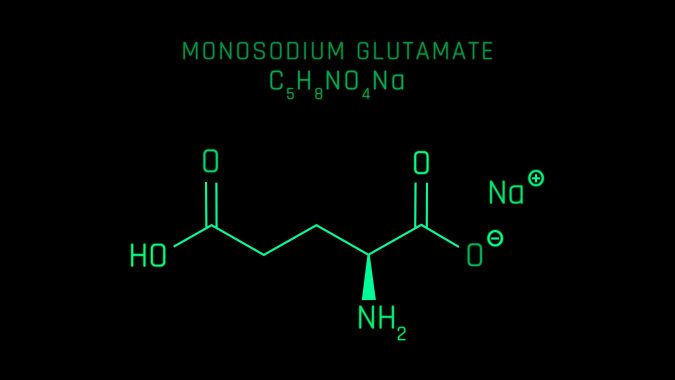
MSG, or monosodium glutamate, is the sodium salt of glutamic acid, one of the most abundant naturally occurring amino acids. It is found in the human body and in many common foods, such as tomatoes, Parmesan cheese, mushrooms, walnuts, and tons of processed foods.
When ingested, MSG dissociates into sodium and glutamate. The latter is a naturally occurring amino acid that also functions as a neurotransmitter in the brain and plays a vital role in cellular metabolism.
Glutamate’s interaction with glutamate receptors is a fundamental mechanism. These receptors are present throughout the central nervous system and are involved in synaptic transmission, learning, and memory. In short, MSG is a pivotal component of human life.
However, decades ago, the presence of monosodium glutamate in processed food raised concerns about its safety.
This salt was, in fact, used as a flavor enhancer in the culinary tradition worldwide. But several years ago, regulatory agencies in many countries of the world banned it from processed foods, in which it was utilized as an additive. The reason for the ban was tied to the fear that MSG could cause cancer.
The Origin of the Fear
The “MSG is toxic” narrative didn’t start with a lab study, but with a letter to the editor. In 1968, Dr. Robert Ho Man Kwok wrote to the New England Journal of Medicine describing numbness and palpitations after eating at Chinese restaurants. He speculated the cause could be salt, alcohol, or MSG.
This anecdotal letter sparked a media firestorm. Suddenly, “Chinese Restaurant Syndrome” was a household term. Subsequent studies in the 1970s—which involved injecting massive, unrealistic doses of MSG directly into the abdomens of newborn mice—fueled the fire, even though those delivery methods bore no resemblance to how humans consume food.
But, already in 1958 the U.S. Food and Drug Administration (FDA) designated MSG as a Generally Recognized As Safe (GRAS) ingredient, along with many other common food ingredients such as salt, vinegar and baking powder.
There is consensus in the scientific community, based on numerous biochemical, toxicological and medical studies conducted over four decades, that MSG is safe for the general population, including pregnant and lactating women, and children. In 1995, the safety of MSG for use by the American population was again reinforced in a review by the Federation of American Societies for Experimental Biology (FASEB). The review was conducted by FASEB upon request of the FDA as isperiodically done for all GRAS ingredients.
Dr. Karl E. H. Bäbler, a noted nutritionist, stated, “MSG is one of the most studied food additives, and the consensus in the scientific community is that it does not pose a health risk.”
In a comprehensive review, Dr. George A. Bray, an expert in obesity research, stated, “While some studies indicate potential adverse effects of MSG, the evidence does not conclusively support that MSG poses significant health risks in normal dietary amounts.” His remarks highlight the ongoing uncertainty surrounding MSG’s safety.
Real Health Risks
An article published on Everhope Oncology listed the possible risks tied to the consumption of high doses of MSG.
The most reported reactions are:
Headaches and muscle sensitivity: A double-blind crossover human study found that in 14 healthy subjects given 150 mg/kg MSG, 8 reported headaches compared to 2 on placebo.
Sensitivity reactions: Some people self-identify as “MSG-sensitive”; one review estimated this might affect about 1% of the population.
In terms of cancer: The monosodium glutamate cancer research has found some pre-clinical signals (e.g., oxidative stress, DNA damage in animals) but human evidence remains lacking and inconclusive.
Hence, at the moment, there is no evidence that MSG may be carcinogenic. Conversely, concerns are tied to its likely neurotoxicity.
Neurological Effects of MSG
As said, in the brain, glutamate serves as a neurotransmitter in addition to its general role in protein and
energy metabolism. Neurotransmitters are stored in nerve endings and are used by nerve cells to inhibit
or excite other nerve cells or target cells, such as muscle or endocrine cells.
Concerns were raised in the late 1960s by John Olney, M.D., of Washington University, that high doses of MSG may adversely affect brain function. Dr. Olney examined the possibility of MSG-induced brain lesions through injection or force-feeding methods in rodents. In one study, Olney subcutaneously injected neonatal mice, ages 2 to 9 days old, with single dosages of MSG.
The amount of MSG injected varied from 0.5 g/kg to even larger dosages of 4 g/kg of the neonate’s body weight, inducing brain lesions and a variety of other physiological effects in the rodents.
However, the dosages of MSG used in these studies were extremely high and the methods of
injection, as well as force-feeding, do not accurately represent the way humans consume MSG.
Interestingly, Olney’s results could not be duplicated when large amounts of MSG were added to the diet.
Indeed, studies evaluating the normal dietary ingestion of MSG in food, including amounts exceeding 40 g/kg body weight (5,000 times higher than normal amounts ingested), found no harmful effects
on the brain.
Following Olney’s observations, early research conducted by Bazzano, D’Elia and Olson compared large amounts of glutamate fed to adult humans and gerbils. The study involved 11 human adult males who consumed diets containing MSG dosages up to 147 g per day for a maximum of 42 days (200 timeshigher than normal consumption). During that time, researchers did not observe any sign of adverse reactions to the dosage and concluded that very high oral doses of glutamate are well tolerated, with no neurological changes by adult gerbils or humans.
Bottom Line
In summary, while MSG significantly influences neurological processes due to its role as a neurotransmitter, the current body of evidence does not conclusively support claims that it is carcinogenic or poses substantial health risks at normal consumption levels. Ongoing research is necessary to fully understand the long-term effects of MSG and its potential connections to various health conditions.
This article also reported the research contained in the following PDF file:
https://www.stawnichys.com/content/uploads/2016/11/Glutamate-and-Monosodium-Glutamate.pdf